As planners continue to seek destinations that balance accessibility, value, and attendee satisfaction, drive-in destinations are proving that some of the best meeting locations are just a road trip away. Offering easy access without the added costs and complexities of air travel, these destinations deliver both convenience and value. Beyond their logistical advantages, drive-in markets often boast an impressive mix of meeting facilities, unique venues, local attractions, and authentic regional character. For groups seeking memorable gatherings with less travel stress and more opportunities for connection, drivable destinations prove that some of the most rewarding meeting experiences can be found just down the road.
Accessibility without airfare
One of the biggest advantages of a drive-in destination is accessibility. While “drive-in” might conjure images of long hours on the interstate, many destinations are just a few hours from major population centers, making them an easy, convenient option for attendees.
Located at the crossroads of major interstate systems, Aurora, Colo., continues to see strong drive-in interest from across the state and nearby states like Wyoming, Nebraska, Kansas, New Mexico, and Utah, according to Amber Hejduk, director of sales for Visit Aurora. “We’re seeing strong interest from regional associations, youth sports, corporate retreats, social groups, and statewide organizations that want a destination feel without the price tag or congestion of larger downtown markets,” Hejduk says. “While Aurora has always benefited from its proximity to Denver International Airport (DEN), we are seeing increased interest from organizations looking to minimize air travel costs and logistical complexity by targeting destinations within a comfortable driving radius.”
The same principle holds true in Ontario, Calif., where a strategic location near some of the West Coast’s largest population centers has helped make the destination a popular choice for meetings and events. “We’re a ‘hop in your car and get here’ destination by a number of different address points, which is key for us,” says Justin Balancio, senior manager of national sales for Visit Ontario. “We’re less than an hour from Los Angeles and Orange County, and approximately two hours from San Diego or just about anywhere else in Southern California. We’re also seeing an increase in demand from planners from Las Vegas and Arizona who want to host in California.”
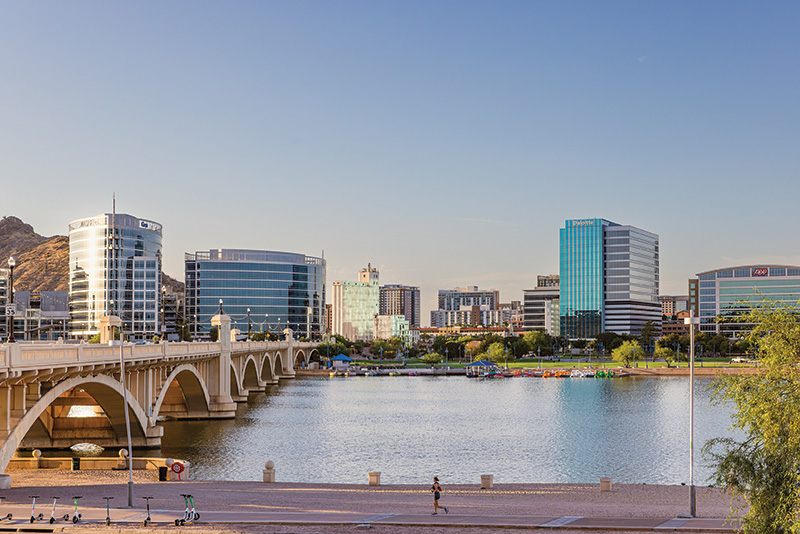
A similar advantage has helped fuel meetings growth in Tempe, Ariz., from across the Southwest due to its central location in Greater Phoenix. As Michael Martin, president and CEO of Tempe Tourism, says, “Tempe is at the center of the Phoenix metro area. If a group wanted to get to downtown Phoenix from downtown Tempe, it’s just a 15-minute drive. It’s also 15 minutes to downtown Scottsdale,” Martin says. “Our central location gives us an advantage because attendees can easily get from one point to another.”
Getting around with ease
Accessibility doesn’t end when attendees arrive. Just as important is the ease of navigating a destination itself, allowing groups to move seamlessly between hotels, meeting venues, dining districts, and attractions without spending valuable time in transit. In Tempe, once attendees arrive, they can park their cars and never have to drive until departure time. “Tempe has an incredibly walkable downtown,” Martin adds. “There are more than 150 shops and restaurants in the downtown core, so it’s the perfect meeting package because we offer so many amenities within a fairly compact area.”
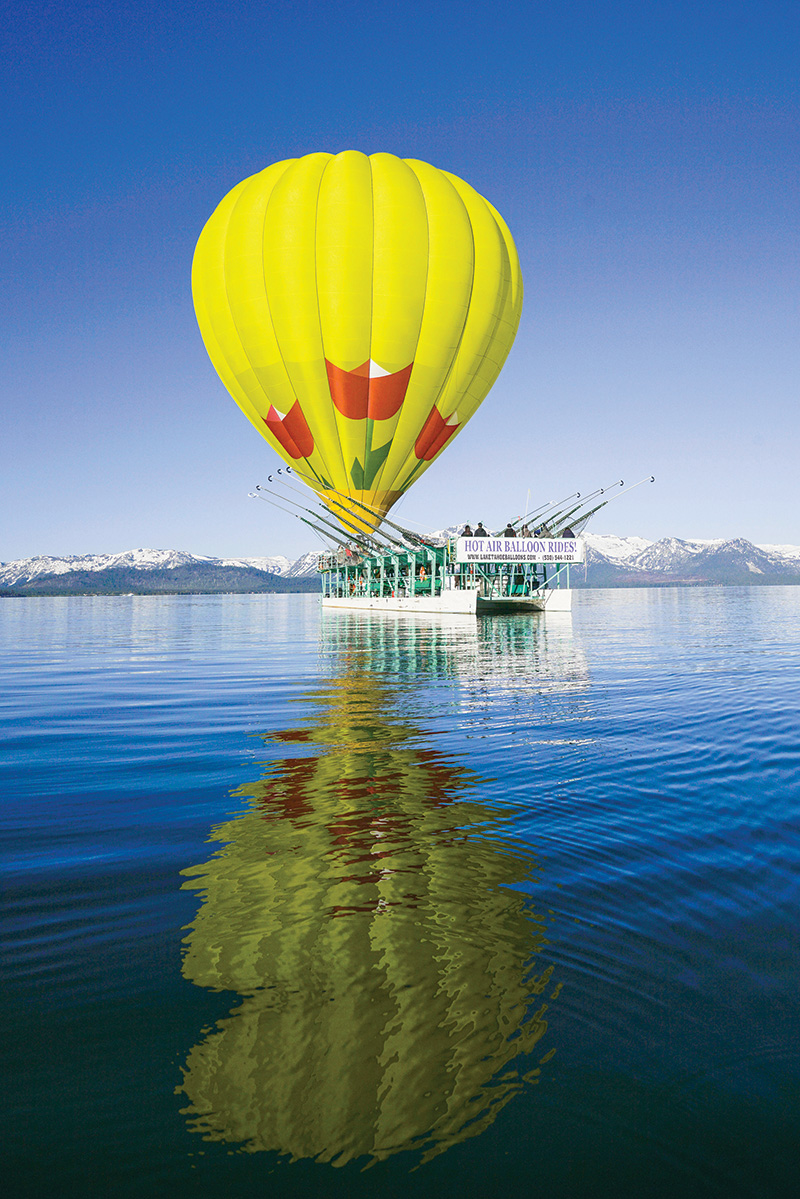
Lake Tahoe’s South Shore also offers a compact, easy-to-navigate destination. With hotels, meeting venues, dining, and entertainment options located within close proximity, many groups can significantly reduce—or even eliminate—the need for ongoing transportation and shuttle coordination.
Beyond walkability, many drive-in destinations are also layering in complimentary transit options to make getting around even more seamless for attendees. In Lake Tahoe, they can use Lake Link, a free on-demand micro-transit service that connects lodging, meeting sites, dining, and recreation throughout the destination. In Tempe, options include Tempe Streetcar, which circles downtown and connects directly to the Arizona State University campus, and Valley Metro light rail service, which runs through the city. In Moab, Utah, complimentary on-demand transit operates much like an Uber service, providing free, on-demand van transportation that picks up and drops off attendees throughout the destination, eliminating the need for a personal vehicle. In Ontario, walkability between the convention center and nearby hotels is complemented by the Greater Ontario Transit (GOAT) system, a free, app-based ride-share service launched earlier this year. “The system offers on-demand transportation to key destinations from the convention center and Toyota Arena to hotels, restaurants, and shopping, giving attendees flexible, no-cost mobility throughout the destination,” Balancio says.
A strong mix of meeting options
Planners also look for drivable destinations with a wide range of hotel and meeting options.
Ruidoso, N.M., offers approximately 3,000 hotel rooms across a mix of properties suitable for groups of all sizes. Options include Inn of the Mountain Gods, a full-scale resort with a dedicated convention center, and additional meeting space at such properties as Hotel Ruidoso and Elevate Hotel, according to Kerry Gladden, president of The Agency, the marketing arm for the City of Ruidoso.
At the center of Ruidoso’s meetings infrastructure is the Ruidoso Convention Center. “It’s 33,000 square feet, including 24,000 square feet of actual meeting space,” says Bernadeen Herrera, convention center manager, “and it’s flexible, which allows us to accommodate everything from mid-size conferences to larger-scale gatherings.”
In Lake Tahoe’s South Shore, continued reinvestment has significantly elevated the destination’s meetings landscape and strengthened its infrastructure. More than $1 billion has been invested across the destination since 2018, says Stuart Maas, senior director of marketing and business development for Visit Lake Tahoe. Anchoring the destination’s meeting offerings is Tahoe Blue Event Center, a purpose-built venue offering more than 50,000 square feet of flexible meeting and event space, including a nearly 27,000-square-foot arena floor that can be configured for a range of group needs.
South Lake Tahoe’s meeting capabilities are further enhanced by a mix of recently renovated and reimagined resort properties offering a wide range of accommodation options. Caesars Republic Lake Tahoe recently completed a $160 million transformation, while Margaritaville Resort Lake Tahoe underwent an $88 million renovation as an all-suite property. Golden Nugget Lake Tahoe is also undergoing a multi-phase redevelopment, adding to the momentum. “We also have boutique resorts, lakefront properties, and a wide variety of independent lodging products that allow planners to customize the experience based on group size and budget,” Maas adds.
Tempe’s meetings landscape is built around a number of full-service hotels and downtown properties. In the city’s core, Tempe Mission Palms offers more than 30,000 square feet of meeting space and 303 guest rooms, while the Omni Tempe Hotel provides 330 rooms, more than 30,000 square feet of meeting space, and the largest ballroom in the city. The Westin Tempe has 290 guest rooms and more than 20,000 square feet of meeting space, and Canopy by Hilton Tempe Downtown is a boutique option with meeting space and popular rooftop amenities—all within walking distance of one another.
Beyond downtown, Embassy Suites Tempe expands the city’s flexibility with all-suite accommodations and meeting space in central Tempe, just minutes from downtown and near major freeway access points, including I-10 and US-60. On the edge of Arizona State University’s campus, The Moxy Tempe and Graduate Tempe add lifestyle and retro-inspired options with meeting capabilities.
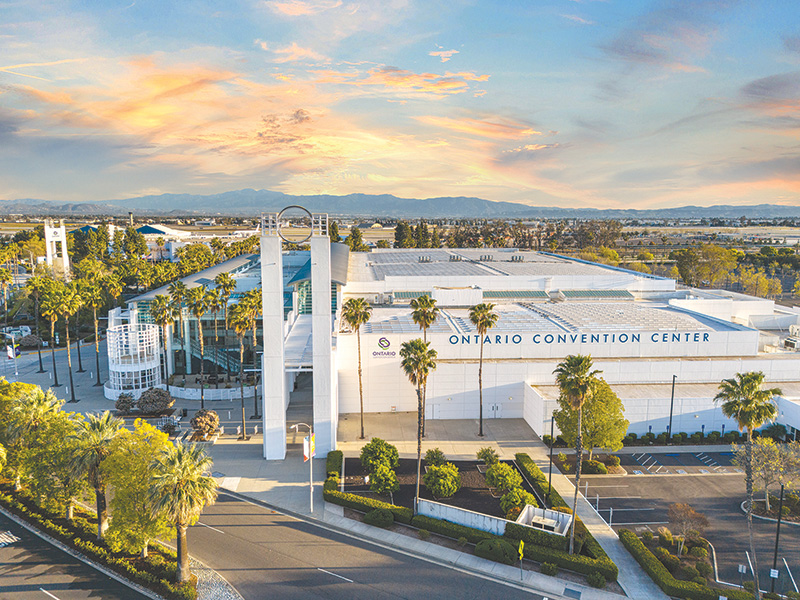
In Ontario, planners benefit from a meetings portfolio anchored by the Ontario Convention Center, a 225,000-square-foot facility featuring a 70,000-square-foot column-free exhibit hall, a 20,000-square-foot grand ballroom, and a range of breakout spaces. For larger-scale events, Toyota Arena offers additional capacity, accommodating up to 11,000 attendees and expanding the destination’s ability to host conventions and major general sessions.
The hotel landscape also brings versatility, with approximately 6,700 rooms across more than 65 properties in Ontario and nearby Rancho Cucamonga. Key meeting hotels include DoubleTree by Hilton Ontario Airport, with roughly 480 rooms and extensive meeting space located adjacent to the convention center, and Delta by Marriott Ontario Airport, offering nearly 300 rooms within walking distance of the convention center.
In Aurora, Gaylord Rockies Resort & Convention Center features more than one million square feet of meeting and event space. The resort is the brand’s flagship property and also the largest resort and convention center in Colorado. Recent enhancements include updated dining venues, expanded outdoor event spaces designed to take advantage of Colorado’s year-round sunshine, and the addition of Mountain View Pavilion, offering more than 12,000 square feet of indoor pre-function space alongside outdoor terraces and lawn areas suited for receptions and activations.
Experiences set the scene
Beyond meeting space and accommodations, drive-in destinations also distinguish themselves through the extensive experiences available outside the meeting room.
Moab, set within one of the most dramatic landscapes in the Southwest, boasts an outdoor-driven extension of the meetings experience. Located in the southeastern corner of the state along the Colorado River, the destination serves as a gateway to both Arches National Park and Canyonlands National Park. “We’re surrounded by beautiful canyons and sandstone, so a lot of people use us as a gateway when visiting Arches National Park and Canyonlands National Park,” says Alison Harford, assistant marketing director for Discover Moab. “Canyonlands National Park is the largest national park in Utah, and we’re closest to the Island in the Sky district, where you can look down over the Colorado River and see views not super dissimilar from the Grand Canyon.”
Moab’s proximity to vast public lands and river access offers a wide range of teambuilding and experiential opportunities. From Colorado River rafting to mountain biking on world-renowned trails like Slickrock, groups have no shortage of shared outdoor experiences. Canyoneering has also become a popular teambuilding activity in Moab, while more adventurous groups can take on guided backcountry tours, dinosaur track discoveries, and even the area’s well-known cliffside
rope swing.
Tempe offers both a vibrant urban center and a Sonoran Desert landscape, giving groups a wide range of options. “We’re where desert meets urban experience,” Martin says. “You have desert experiences at Papago Park and South Mountain Park just west of us, so you have these escapes into natural desert areas all within a few minutes of our urban downtown, where you can experience shopping, dining, and nightlife.”
Tempe’s compact downtown also includes Tempe Town Lake, where attendees can enjoy kayaking and paddleboarding between sessions, or take in productions at Tempe Center for the Arts and other nearby performing arts venues.
Beyond Tempe’s urban core, outdoor recreation and signature Southwest experiences are just minutes away. Groups can explore the desert on guided horseback rides, Jeep tours, or hot-air balloon excursions, Martin says. Papago Park offers hiking trails, cultural attractions, and night golf at Grass Clippings Rolling Hills Golf Course.
In Lake Tahoe’s South Shore, the natural environment offers an easy extension of the meeting agenda into the outdoors. “The outdoor access is really what differentiates Lake Tahoe,” Maas says. “Attendees can go from a morning keynote to paddleboarding, hiking, boating, mountain biking, golf, skiing, snowshoeing, or a sunset cruise within minutes.”
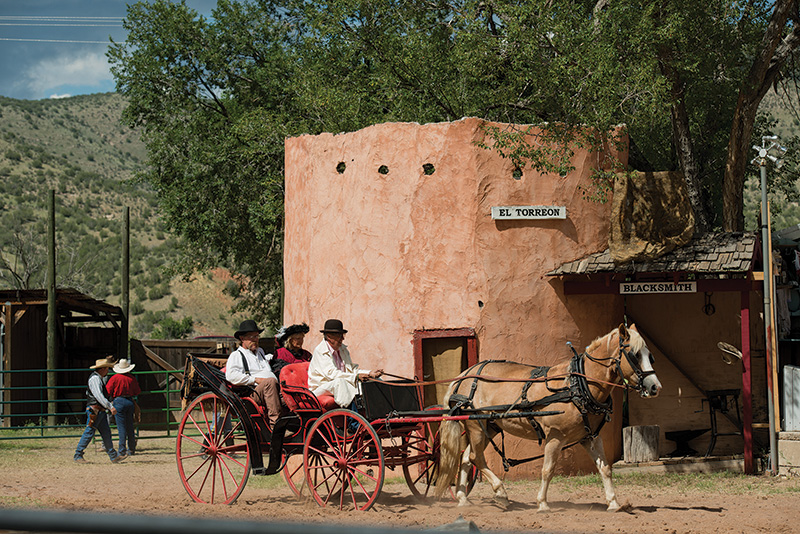
Ruidoso offers a balance of laid-back mountain scenery and active outdoor pursuits. “We have a lot of attractions and assets people can take advantage of,” Gladden says. “Whether you are a hiker or biker, or just want to sit on the deck and look at a pretty view, we have something for everyone.”
For example, groups visiting Ruidoso can incorporate high-adventure outings into the agenda, or choose more relaxed, scenic downtime. Midtown serves as the main social hub, offering dining, shopping, and unique group-friendly activities, like axe throwing, at local venues. Outdoor recreation is equally accessible, with Grindstone and Cedar Creek trail systems and Grindstone, Alto, and Bonito lakes, where attendees can fish, paddleboard, or simply enjoy the mountain setting. Grindstone Lake’s inflatable Wibit waterpark adds a playful group element in summer months, while golf outings at The Links at Sierra Blanca, located near the convention center, offer leisure and teambuilding options.
A sense of place
Drive-in destinations can also offer groups a strong sense of place through their culinary and cultural scenes. In Ruidoso, the lively Midtown district is a prime spot for groups to gather at locally owned restaurants, breweries, and tasting rooms, including Noisy Water Winery, all within an easy-to-explore downtown setting. In Moab, groups can unwind at favorites like Moab Brewery and Proper Brewing Co., or gain a deeper appreciation for the region at the Moab Museum, where rotating exhibits explore the area’s natural and cultural history. Meanwhile, Tempe, Lake Tahoe, and Ontario pair distinctive dining scenes with arts, entertainment, and outdoor experiences, giving planners opportunities to extend the meeting beyond the agenda and immerse attendees in the character of each destination.
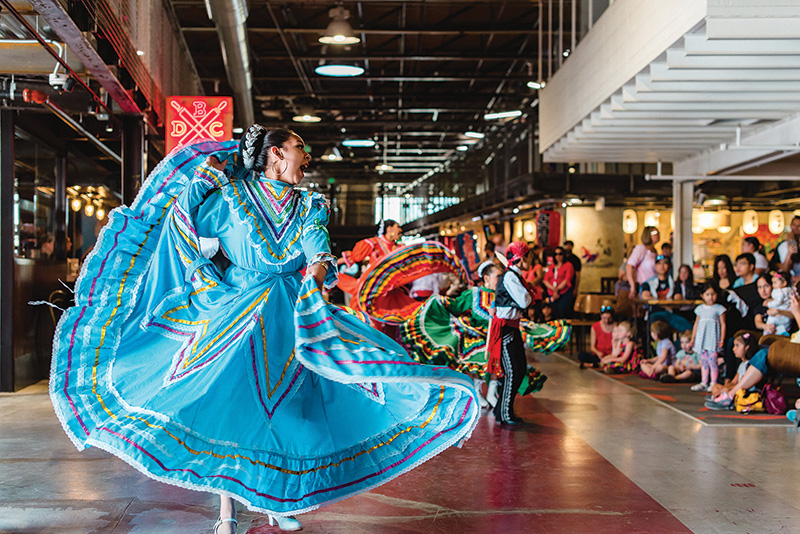
Aurora takes that concept even further with a culinary identity rooted in global flavors. “Aurora recently joined a statewide initiative with the MICHELIN program and is widely recognized as Colorado’s culinary capital of global flavors,” Hejduk says. Along Aurora’s nationally recognized culinary corridor on Havana Street, attendees can explore authentic Korean, Ethiopian, Vietnamese, Mexican, and other global cuisines.
Elsewhere in the city, Stanley Marketplace offers a highly walkable dining and gathering space housed in a former aviation factory, bringing together more than 50 locally owned businesses ranging from chef-driven concepts and craft beverages to international flavors like Argentine empanadas and French patisserie. The experience continues at La Plaza Colorado, where a large food hall anchors the country’s largest Hispanic marketplace of its kind, featuring 24 kitchens serving everything from regional Mexican dishes and street tacos to sushi with Latin influences and wood-fired pizza—creating a dynamic, group-friendly setting that showcases Aurora’s multicultural identity. “Aurora stands out culturally,” Hejduk adds. “We’re the most diverse city in Colorado, with more than 400 international restaurants and communities representing cultures from around the world. That gives attendees an experience that feels unique
and memorable.”