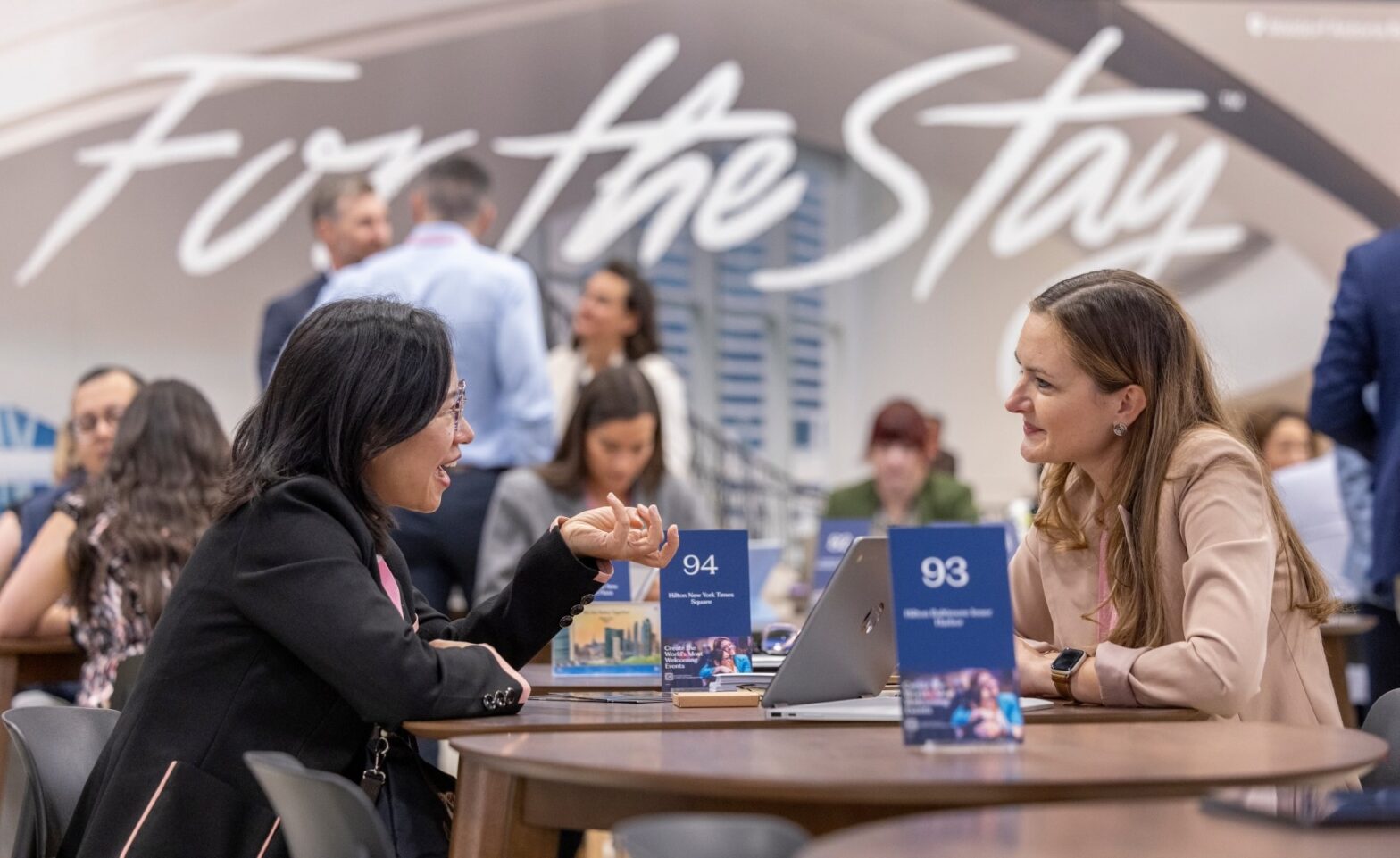
At a time when attention is currency and genuine connection feels increasingly rare, meeting and event organizers face a critical challenge: How do you create experiences that resonate long after attendees leave the venue? Attendee experience and engagement isn’t just about keeping people entertained; it’s about designing meaningful touchpoints that foster connection, spark conversation, and deliver value beyond the event itself.
Attendee experience covers every touchpoint, from the first marketing email through post-event follow-up. Engagement is how actively people participate and connect with your content, each other, and your brand. Together, they form the foundation of successful events that attendees remember, talk about, and return to year after year.
Today’s attendees aren’t showing up to sit and listen; they want immersive experiences, authentic connections, and moments worth sharing. For event organizers, this means rethinking traditional formats and embracing creative strategies that can be implemented across different scales, budgets, and delivery formats.
Attendee experience and engagement are essential components of meetings and events because they determine whether an event is simply attended or genuinely remembered, according to Melissa Auer, vice president of exhibition operations for MHI, which produces ProMat and MODEX, two of the largest material handling and supply-chain trade shows in North America.
“The way people feel before, during, and after an event directly influences how they perceive the brand, the value they associate with it, and whether they choose to return or recommend it to others,” Auer says. “Pre-event engagement builds anticipation, onsite experiences drive connection and satisfaction, and post-event touchpoints extend the event’s impact beyond the show floor. Together, these moments create a seamless journey that fuels word-of-mouth, differentiates the event, and builds long-term trust and loyalty.”
Auer and three other event professionals recently shared their insights on what’s working now in attendee experience and engagement. Their strategies reveal a common thread: The most successful approaches balance visual appeal with genuine value, create opportunities for organic connection, and treat the event as part of a longer engagement journey rather than a single experience over one or several days.
Low-pressure connection in high-energy settings
Not every attendee arrives at an event ready to network aggressively, which is why smart organizers are finding creative ways to facilitate connection without the pressure.
Amanda Salazar, vice president of communications and membership for a manufacturing association, discovered this when her organization introduced small-group trivia at one of its recent events.
“By placing attendees into small teams, we created a low-pressure way for them to connect, collaborate, and naturally network without the intimidation that often comes with open-ended social time,” Salazar says. “The competitive element kept the energy high, but the real value was in how it encouraged meaningful interaction among people who may not have engaged otherwise.”
This approach requires no special technology or elaborate production, just thoughtful team formation and well-crafted questions, Salazar says, noting the fun activity naturally breaks down barriers between strangers.
Auer used a similar quiz-based approach at a recent small meeting, incorporating questions about content covered in previous sessions and awarding prizes to the winners the following morning.
“Everyone arrived on time, so I think it helped to motivate them to get there,” Auer says, adding that the strategy reinforced learning while encouraging punctuality.
Playfulness as a professional engagement tool
Corporate event planners often assume professional attendees want serious, buttoned-up experiences, but, according to Heather Pilcher, CEO and executive producer of Blue Spark Event Design, the reality is different.
“We sometimes underestimate how playful attendees want to be at a conference,” Pilcher says. “Give adults permission to be whimsical for even a moment, and they lean all the way in. This past year, we saw huge success with inflatable prop stations, a carnival-inspired theme complete with stilt walkers, and a jazz-themed corporate suite that felt like stepping into a speakeasy.”
According to Pilcher, the key is understanding emotional resonance. “People remember how something made them feel,” she says. “When you introduce an unexpected moment of joy or a touch of childhood nostalgia, attendees relax and engage more authentically.”
Trish Leonard takes a similar approach in her work as owner and president of TLC Marketing and Creative Services. For a recent short film festival and gala, Leonard created a multi-generational experience that balanced sophistication with accessibility.
“Adults enjoyed the champagne and red-carpet treatment, while young filmmakers had their own dedicated photo area with director chairs, a DJ, and passed refreshments,” Leonard says. “We transitioned the gala into an after-party nightclub atmosphere, complete with music, food, drinks, and dancing.”
The event drew a packed theater of more than 225 attendees, spanning ages 10 to 80—each feeling celebrated in their own way, Leonard says.
Scaling experiences across budget levels
Creating memorable experiences that work across different budgets remains a constant challenge in event planning. The most successful organizers build activations that scale naturally without losing their core impact.
Salazar’s approach centers on recognition and competition rather than expensive production.
“Manufacturing Madness and the Manufacturer of the Year awards give our members meaningful opportunities to stand out at minimal cost,” Salazar explains. “Manufacturing Madness works especially well because it’s a virtual, statewide competition that generates excitement, friendly rivalry, and wide visibility for companies of all sizes.”
For smaller events and previews, Leonard and her team often organize intimate behind-the-scenes tours (led by staff), highlighting historical artifacts and sharing stories from local families. “These activations require minimal cost but deliver profound emotional impact and VIP-level access,” Leonard says, noting the TLC team recently elevated this intimate tour concept into a large-scale anniversary event for a small historic zoo and botanical garden. The same core approach was expanded to include immersive history installations, enhanced lighting, and interactive exhibits, with sponsorship tiers that allowed partners of all sizes to participate, she adds.
For Pilcher’s client, LimeLife by Alcone, which recently celebrated its 10th business anniversary, the approach centered on a modular design philosophy. A larger-than-life “10” installation became an Instagram-worthy photo moment, while a two-sided interactive selfie station invited guests to celebrate the company’s history and future in a fun, engaging manner.
“This approach has adapted easily for different budget levels by scaling the build complexity and interactive elements,” Pilcher explains. “Whether we went big with custom structures or kept it streamlined with modular pieces, the experience has always delivered connection and impact.”
VIP treatment creates lasting impressions
VIP treatment isn’t just about exclusive perks and gifts. When done well, premium experiences can provide benefits throughout the event.
According to Auer, MHI’s Premier Club program exemplifies thoughtful VIP experience design. The organization sends swag boxes to VIP attendees before the show, including practical items like water bottles, snacks, and hand sanitizer with the show logo. At the event, Premier Club members enjoy a VIP registration line and a sales-free lounge with complimentary coat and bag check, comfortable seating, charging stations, and meeting rooms. Staff members help VIP attendees navigate the show floor and app, and reserved seating at keynote sessions ensures prime viewing.
The program also includes a valuable post-event component. “After the show, we send our Premium Club members the list of exhibitors that scanned their badge—reverse lead retrieval—to help them remember all the companies they were interested in at the show,” Auer says, adding that this post-event touchpoint transforms the VIP experience from a one-day perk into a lasting business tool.
Instagram-worthy meets mission-driven
Every modern event organizer is tasked with creating shareable moments while still delivering substantive value. Salazar’s approach starts with purpose.
“I always start by asking, ‘Does this element reinforce our mission, and will it spark a real conversation?’ If the answer is ‘yes,’ that’s when we layer in visual appeal,” she explains.
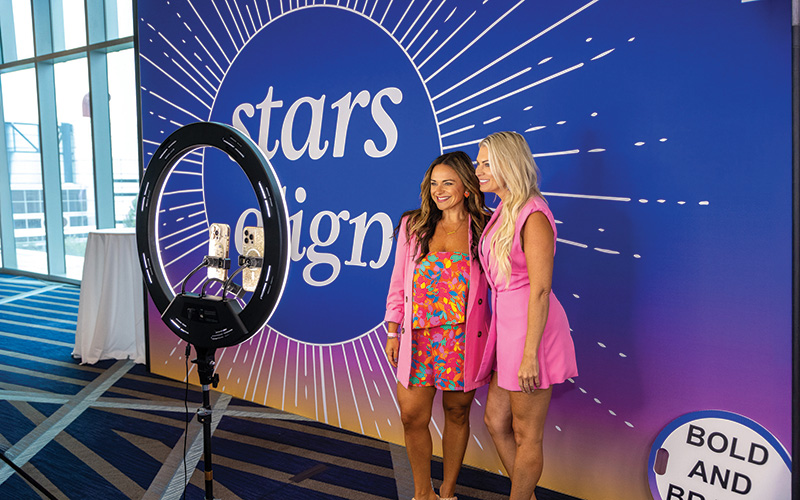
At the 2025 Catalyst women-in-industry event, the team designed meaningful, mission-aligned backdrops celebrating women in industry, leadership, and workforce pathways.
“They were beautiful and highly shareable, but they also served as conversation starters,” Salazar says. “Women used them as anchors to discuss their own career journeys, mentorship, and the challenges they face. The photo moment brought people in; the substance kept them there.”
Leonard starts with the same question: “What’s the meaning?” At the short film festival, the “Young Filmmaker” area featured highly photogenic elements, including director chairs, custom signage, and curated lighting.
“The real value was emotional,” Leonard emphasizes. “Young filmmakers felt recognized, celebrated, and ‘seen.’ It gave them confidence and a sense of belonging in a traditionally adult-dominated industry. The photos looked fantastic—but the experience made the children feel like stars.”
Pilcher saw this dynamic at work during a direct sales organization conference, where a bold, colorful chair in a New York scene served dual purposes. In addition to providing strong solo photo opportunities, it also created a natural gathering point for teams. “These shared moments felt especially meaningful in a direct sales organization, where community and connection guide much of the culture,” Pilcher says.
The power of recognition and celebration
Intentionally recognizing and celebrating attendees is one of the most powerful yet overlooked engagement tools.
“One of our most memorable and unexpectedly impactful activations is the intentional way we honor individuals at our events,” Salazar says. Rather than simply announcing names, her organization shares short stories, quotes, or accomplishments.
“It transforms the room,” she says. “Attendees become emotionally invested, the energy shifts, and people feel connected to one another in a way that’s hard to achieve through standard presentations. The recognition becomes an experience: People cheer, take photos, and continue talking about that moment long after the event ends. It’s a reminder that celebrating people—not just programming—can be one of the most powerful engagement tools we have.”
Leonard saw this at the short film festival, where the team elevated the red-carpet arrival into a multisensory creative zone. Instead of simply walking the red carpet, guests moved through a curated experience with a filmmaker selfie studio, an interactive DJ, and live interview stations mimicking Hollywood press lines. “It elevated the experience from ‘take a photo and move on’ to ‘feel like a filmmaker for the night,’” Leonard explains.
Pilcher observed powerful emotional responses when designing leadership photo opportunities for a conference client. These leaders played active roles in guests’ business growth and training cycles, so meeting them in person was both special and energizing for attendees, she says.
“The results were unforgettable,” Pilcher says. “Guests responded with joy and excitement. Many teared up or jumped into hugs as they connected with the leaders who inspired them.”
Memorable activations
Auer describes a memorable example from the 2024 edition of Expo!Expo!, IAEE’s annual meeting and exhibition, where event services provider GES created a game-show activation around the event’s “gamechangers” theme. Attendees were invited to participate at appointed times, and the activation featured lively hosts and games like Plinko, Spin the Wheel, and Family Feud.
“It helped folks to show up for their appointments—you don’t want to let your teammates down—and it was very entertaining, so several people walking the show would stop to watch,” Auer says.
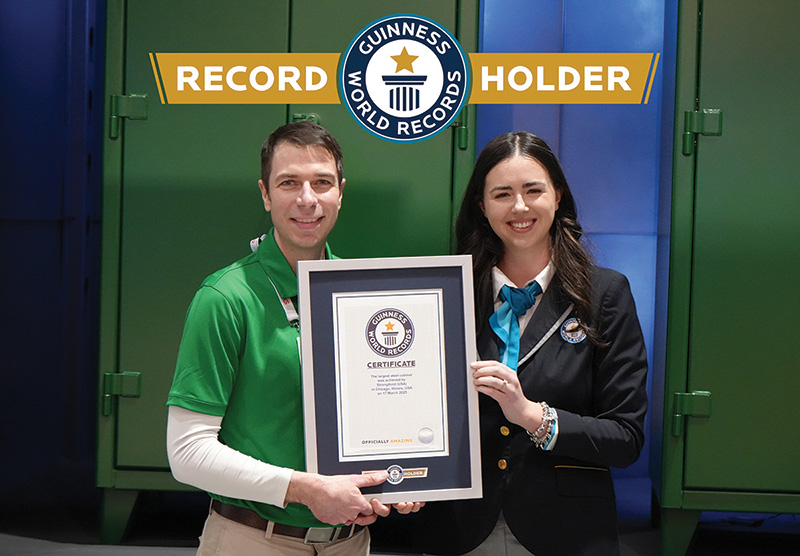
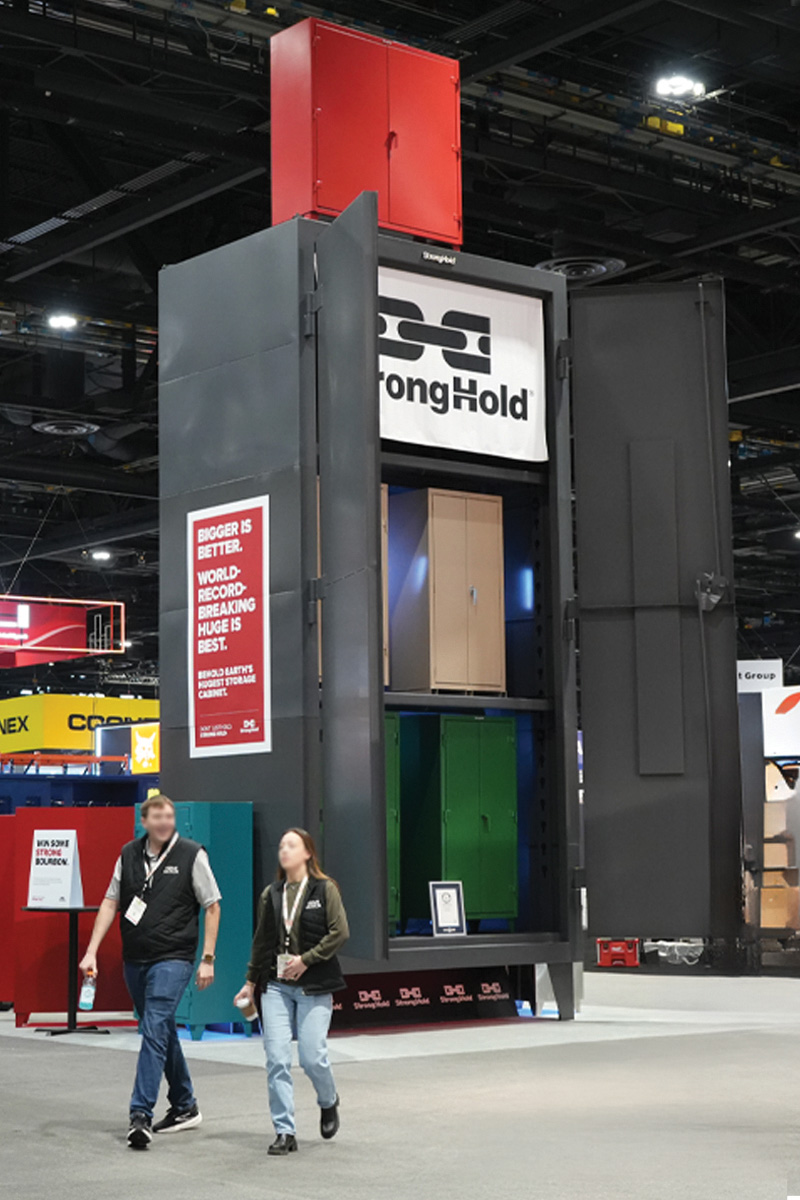
Auer recalls another impactful activation, at ProMat 2025, when an exhibitor invited the Guinness Book of World Records to document the world’s largest steel cabinet. The exhibitor gave out T-shirts and invited attendees to
have their picture taken with it, Auer says.
“It was an exact replica of the normal size the exhibitor sells. It brought a lot of publicity and was eye-catching, to say the least. There was a lot of hype before and after the event around their accomplishment.”
Extending the experience beyond the event
The attendee experience doesn’t begin when doors open or end when they close. Pre- and post-event phases offer critical opportunities to deepen engagement and extend value.
Salazar’s pre-event strategy includes storytelling, speaker introductions, social media teasers, and tailored save-the-dates.
“Previewing Catalyst speakers or showcasing the HRSE (HR, Safety and Environmental Conference) agenda early helps attendees feel connected and excited,” Salazar says, noting the team shares photo galleries, sponsor appreciation posts, speaker quotes, and top takeaways after the event. “People want to feel like the event mattered. Extending the life of the event content reinforces the sense of community.”
The most meaningful engagement comes from personalization, Salazar adds. This could include member spotlights or sending attendees a highlight reel that includes them. “Those touches turn a one-day event into an experience with real longevity.”
Leonard builds engagement through storytelling campaigns, which highlight behind-the-scenes preparation and historical milestones, and spotlight participants. She also uses engagement prompts, asking attendees to vote on themes, décor elements, or which film they’re most excited to see. Post-event tactics include personalized thank-you messages and conversational surveys.
“The tactics that create the most meaningful engagement are the ones that make attendees feel like they’re part of the story, not just spectators,” Leonard says.
Pilcher recommends starting the engagement journey early, with simple tactics like social media hashtags or branded frames. “On the post-event side, nothing beats strong recap content,” Pilcher says. “A well-produced highlight reel and a thoughtful follow-up email packed with additional resources give attendees a final touchpoint, reinforcing the message and extending the life of the experience.”
Adapting strategies across formats
As events continue to span in-person, virtual, and hybrid formats, organizers must understand which strategies translate across environments and which work best in specific settings.
Storytelling, pre-event content, attendee spotlights, post-event highlight reels, interactive Q&A, and sponsor features all translate effectively across all event formats.
“These strategies work because they’re rooted in connection, not logistics,” Salazar says.
Certain experiences remain uniquely powerful in specific formats. In-person events are well-suited for sensory engagement, hands-on demos, facility tours, and networking. “When you can shape the environment through sound, scent, visual design, or tactile moments, you immerse attendees in a way that virtual platforms simply can’t replicate,” Pilcher says.
Virtual and hybrid event formats offer distinct strengths: on-demand content libraries, short-form educational videos, and breakout discussions that bring together people from multiple locations. Leonard identifies livestreamed content with backstage camera angles and digital engagement rooms as particularly effective in virtual settings.
The key is avoiding a one-size-fits-all approach, according to Pilcher. “We tend to approach engagement with the belief that every format deserves its own tailored strategy,” she says. “The experience should always reflect the client’s goals, and those goals often come to life differently depending on the environment.”
The human element
All of these attendee engagement and experiential strategies share a common theme: The most effective attendee experiences prioritize human connection over production spectacle. Whether it’s low-pressure trivia to help introverts network, playful activations, or recognition moments celebrating individual achievements, the focus stays on creating authentic connections between people. The tactical details may vary by event type, budget, and format, but the underlying principle remains constant. Great attendee experiences happen when you design with empathy, creativity, and a genuine commitment to making every person feel valued, connected, and inspired.
“My most memorable events succeed because they blend the joy of in-person connection with thoughtfully designed creative experiences like custom photo moments, engaging activities, and live performances that invite people to fully participate,” says Pilcher. “Just as important is the behind-the-scenes execution that, when done right, goes unnoticed. Seamless audiovisual, well-run breakout sessions, great catering, and transportation that keeps everything
moving smoothly all contribute to an experience people continue to talk about long after the event ends.”
Design Moments to Last with Disney Meetings & Events
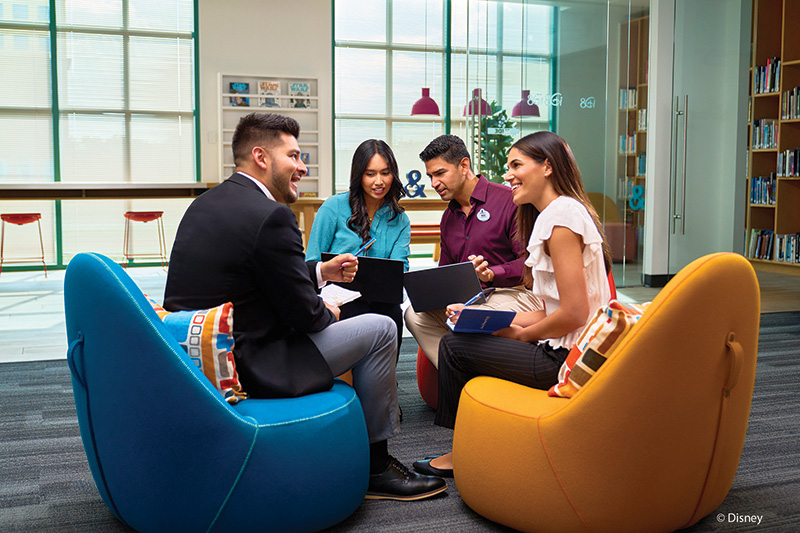
Disney Event Architects partner closely with meeting planners from initial concept to final execution within the Disney Creative Studio.
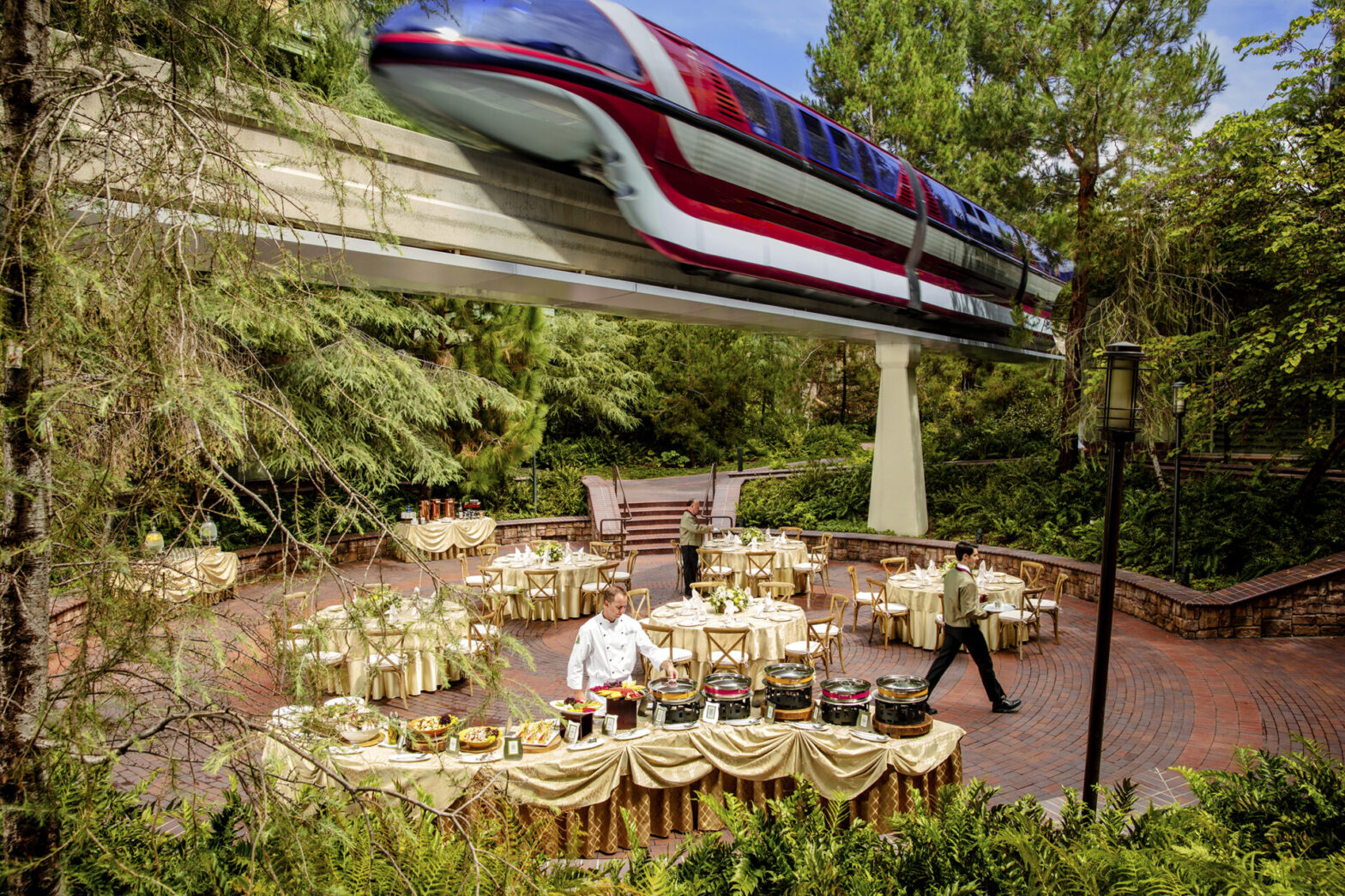
Disney Meetings & Events creates experiences that resonate long after attendees leave by designing every detail with intention, collaboration, and storytelling at the core. Disney Event Architects work alongside meeting professionals from dream to delivery inside the Disney Creative Studio, a one-stop hub of resources, expertise, and imagination. Here, creative designers, set builders, entertainment specialists, and technical teams collaborate to shape environments that feel immersive rather than transactional.
With access to thousands of props, custom décor, and more than 182,000 square feet of meeting space, plus the Downtown Disney District in Anaheim, Calif., the Disney Creative Studio can transform a room or even build an entirely new world to reinforce your meeting or event theme. Entertainment elements like live bands, DJs, dancers, and aerialists elevate energy and emotion, while thoughtful branding details, such as illuminated tables and branded chocolates, ensure cohesion throughout the experience. Purposeful networking programs and ice-breakers, such as the Walk in Walt’s Footsteps Disneyland Guided Tour, are designed to spark real connections. The result is an experience that doesn’t end at load-out—it stays with attendees well beyond
the event.