As event planners conceive of events designed to build connections and increase membership and revenue, and as convention and visitors bureaus (CVB) compete for events to fill convention centers, hotel rooms, area restaurants, and local retail stores, relationships have never been more important. Our CVB & Planner Relationship Survey reveals significant findings for each segment.
For planners facing high costs and even higher attendee expectations, site selection is increasingly important. Many event organizers are turning toward trusted destinations and staff who have delivered for them in the past. Amid turnover, maintaining existing working relationships can be an advantage for planners and the associations and companies they represent. For their part, CVBs thrive playing the middleman, making important connections and providing information to help shape immersive agendas.
As planners look beyond the hotel ballroom and trade show floor, their partnership with CVBs can be a win for both: matching attendees’ desire for unique experiences while also showcasing the destination. In addition, a positive experience can lead to repeat convention or conference bookings and to leisure bookings by attendees seeking to enjoy personal travel with family or friends.
Convention Southwest’s 2026 CVB & Planner Relationship Survey asked our audience of more than 18,000 planners and supplier professionals to share their insights and experiences on current issues affecting them individually and those common across the industry. A third-party company administered the survey online in December 2025. Responses were collected anonymously to protect participants’ privacy and to encourage complete candor in their answers.
After a thorough analysis of all responses, the Convention Southwest team compiled and calculated the survey results into the summary findings shared in our 2026 report. The results are illustrated with reader-friendly graphs, charts, and direct comments from survey respondents. Among the notable findings of this year’s survey are these positive takeaways: 67.6% of planners indicated they have plans to hold two or more events this year; 45.4% of CVBs reported the same or greater financial results in 2025 than in 2024; and 88.4% of CVB staff were the same size or larger in 2025 than in 2024.
Most encouraging for our focus on relationships, both sides overwhelmingly indicated the CVB-planner relationship has not been negatively affected by common industry issues. As one respondent noted, “Planners and CVBs share the same goal: to deliver a successful, seamless event that supports attendees and the local community.”
Event trends
Despite financial concerns, declining international travel, and other challenges, gathering at events remains a priority for professionals and other groups. According to the survey, approximately one-third (32.4%) of planners are organizing and executing at least two events in the Southwest, while 14.7% of planners project to host six or more events in the Southwest this year. On average, planners will hold 2.6 events in the Southwest in the next 12 months.
The most common types of events being planned are conferences (63.6%), asssociation events (60.6%), corporate meetings (48.5%), and networking/social events (39.4%), followed by trade shows (18.2%) and government meetings (12.1%).
Attendance remains strong, according to the report findings. More than half of planners (51.5%) organized events with more than 100 attendees, and the average attendance at events was 317.
The encouraging news falls in line with Freeman’s End-of-Year-Trends Recap, which noted that face-to-face remains the most trusted marketing channel, with in-person event participation holding “remarkably consistent” in 2025. That plays out with 51% of attendees planning to attend two to three events in the next 12 months, according to Freeman.
Factors tipping the scales
The destination is more than a backdrop for events. Planners are making strategic decisions that align with their business goals. At the root of many site selections are budget considerations, confidence in a CVB’s capabilities, and convenience.
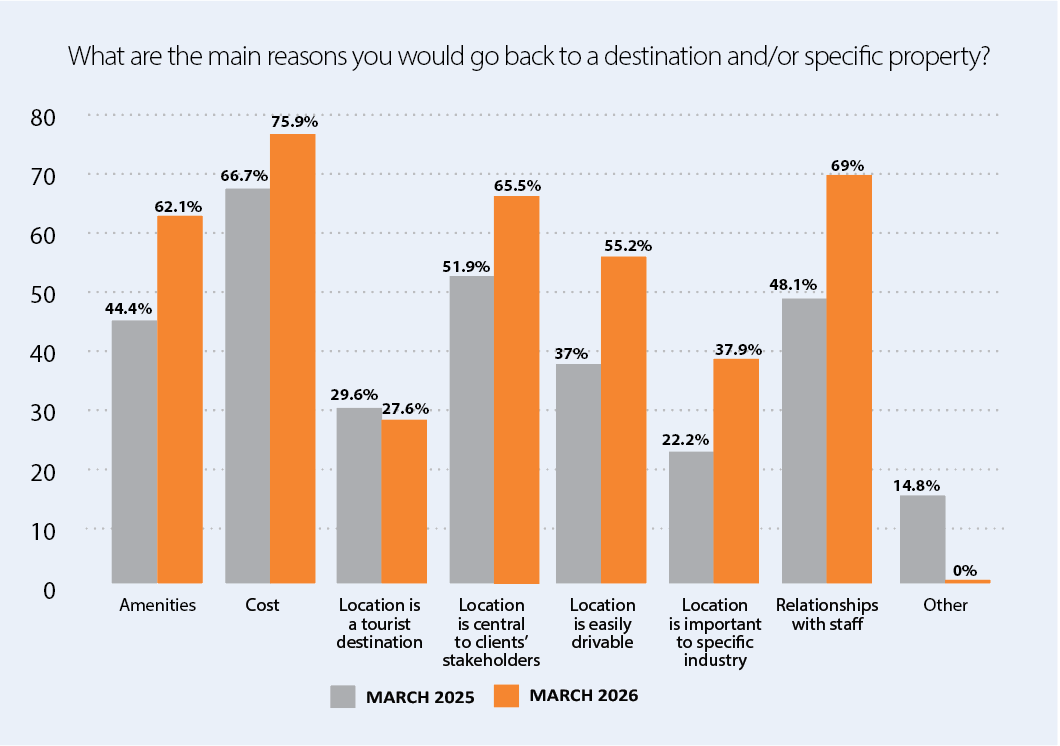
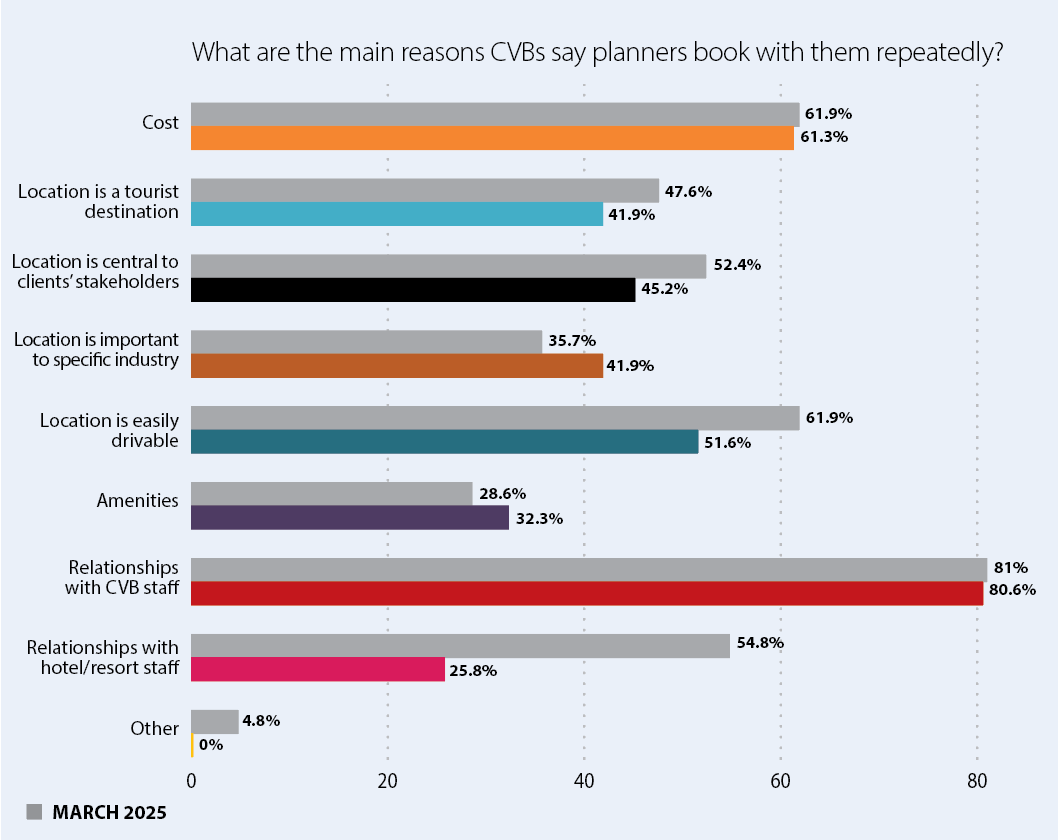
Planners regularly rely upon known quantities. Cost, at 75.9%, is the driving reason planners return to a destination or hotel. Proximity is another important factor in choosing a destination, with 65.5% of planners considering locations central to key stakeholders; 55.2% considering destinations with easy drivability for attendees; and almost 38% considering locations important to specific industries.
Amenities, at 62.1%, is a chief driver in site selection, as planners seek to create more experiential and memorable events. A city that is a tourist destination sways 27.6% of planners, who can use the appeal to create pre- and post-event tours or try to secure favorable hotel rates for attendees extending their stay as a mini-vacation for themselves and/or their families. Along those lines, 13.8% favor family-friendly destinations.
Planners’ perspectives
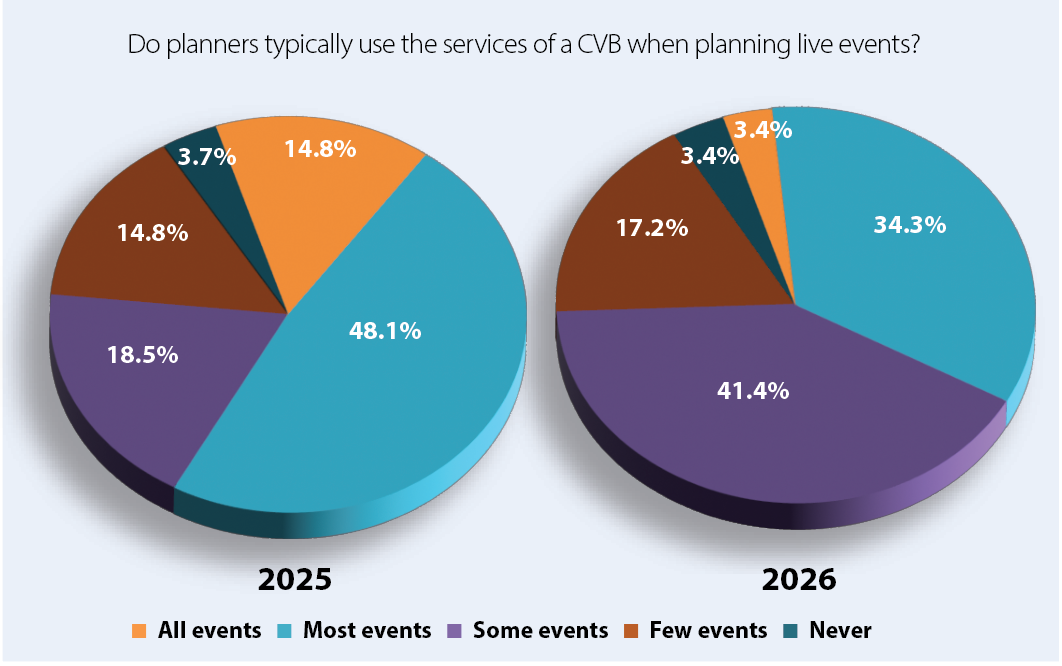
Planners consistently rely on CVBs as a resource for scouting events. In fact, 96.6% reported using CVB services for the live events they produced in 2025.
As one planner noted, “The most effective CVBs position themselves not just as marketers but also as strategic partners—providing operational expertise, data transparency, advocacy, and hands-on support throughout the event lifecycle.”
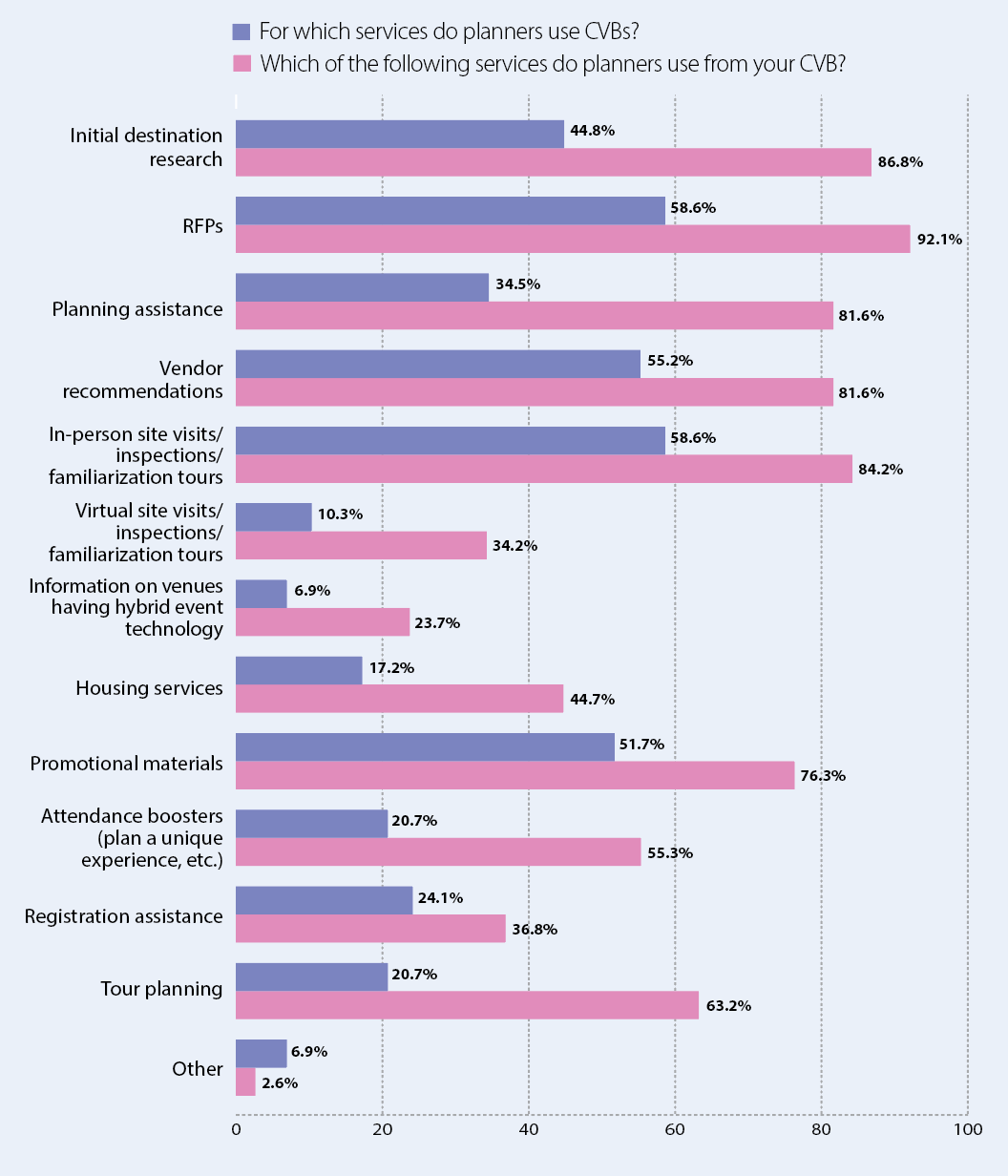
The most commonly used CVB services by planners are RFPs (58.6%), in-person site visits/FAM trips (58.6%), vendor recommendations (55.2%), promotional materials (51.7%), and planning assistance (34.5%).
Planners noted a CVB’s expertise with venues as a valuable resource for creating new experiences for attendees, even for events returning to a destination.
“Help us develop relationships with the hotels,” one planner suggested. “Show us the unique spaces in town or ways to creatively hold meetings, so they’re not the same old thing.”
Additionally, CVB assistance with promotional materials, including microsites, logos, and social media assets, saves planners time and resources, allowing them to focus on other aspects of the upcoming event. “Our budgets are limited, so anything they can provide via marketing materials and attendance boosters that are ready to be used is fantastic,” said a planner. “More plug-and-play helps us all.”
Adds another planner: “CVBs should have a one-pager for meeting planners about local transportation options for the airport and around town. This is always lacking.”
Relationship trends
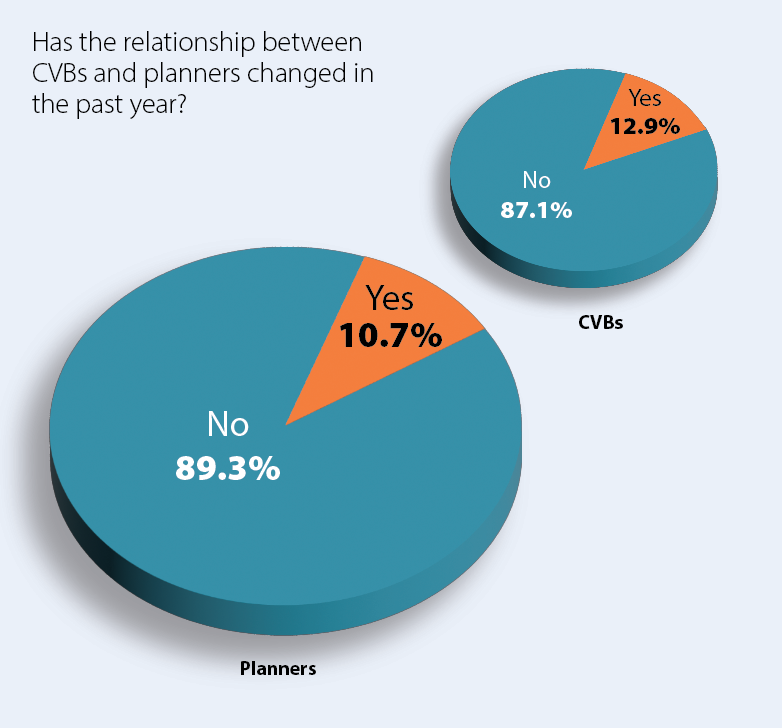
Despite the market challenges of 2025, CVBs and planners remain optimistic about their relationship, with 89.3% of planners and 87.1% of CVBs reporting their relationship had not changed in the past year.
As with any type of relationship, both sides agree regular communication helps overcome potential obstacles.
“When planners communicate openly and invite us into the ‘why’ behind their event, CVBs can deliver not just service, but real solutions,” said a respondent from the destination side. “That’s when events become truly memorable and destinations become long-term partners.”
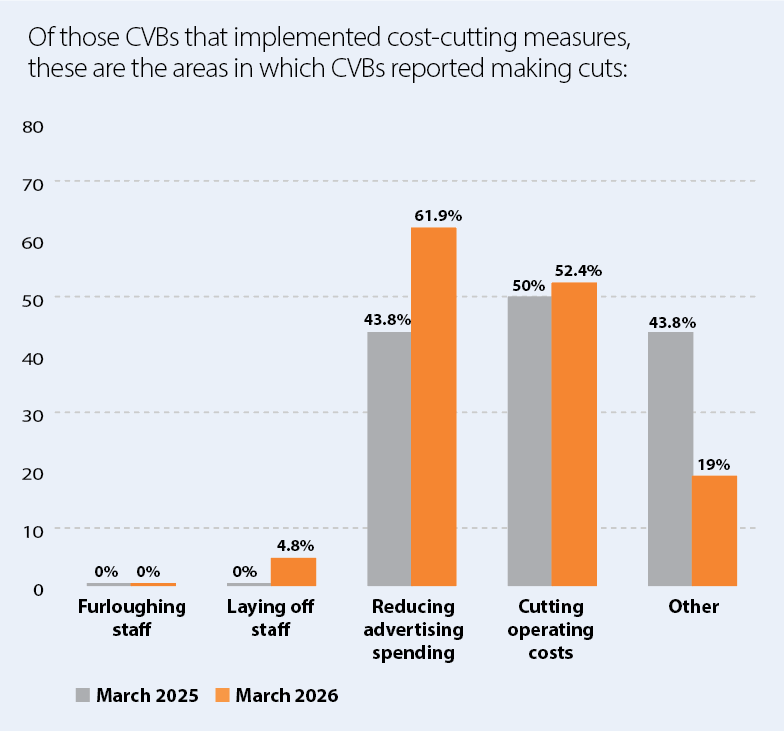
One of the survey’s most encouraging reflections about the industry is only 4.8% of CVBs reported laying off staff due to budget cuts.
That said, venue staffing remains a concern. Three-quarters of planners cited the issue among F&B workers, with 62.5% pointing to reductions in clean-up and set-up staff. One-third of planners said their clients have noted hotel shortages in the past year, and 27.3% commented on reduced staff and services at venues. Additionally, nearly 70% of CVB representatives pointed to a drop among customer service staff, which 50% of planners have also noticed.
To help offset challenges, CVB staff encourage planners to provide as much information as they can regarding attendance, room nights, and must-haves early in the site-selection process.
“Vague details only delay the bid process due to additional research required,” noted a CVB member who responded to the survey.
Respondents from the CVB side are also seeking more time to respond to RFPs. While there is still a time crunch, survey results point to easing the burden. According to responding planners, the peak time to receive proposals is tied at 39.3% between three to six days and one to two weeks.
Common challenges
Planning a meeting is never easy. Challenges present themselves in different ways, and planners and destinations are responding with creative solutions.
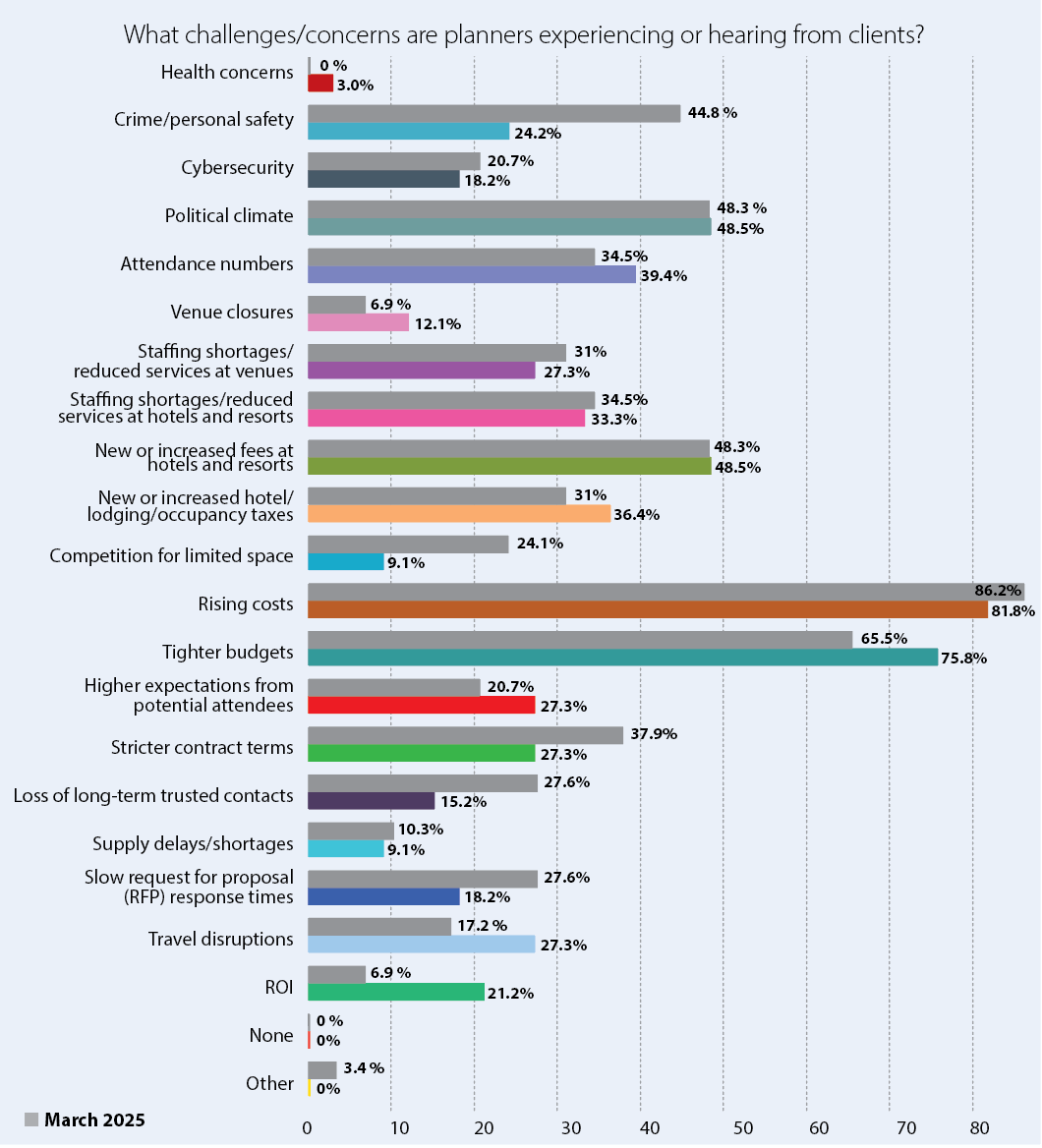
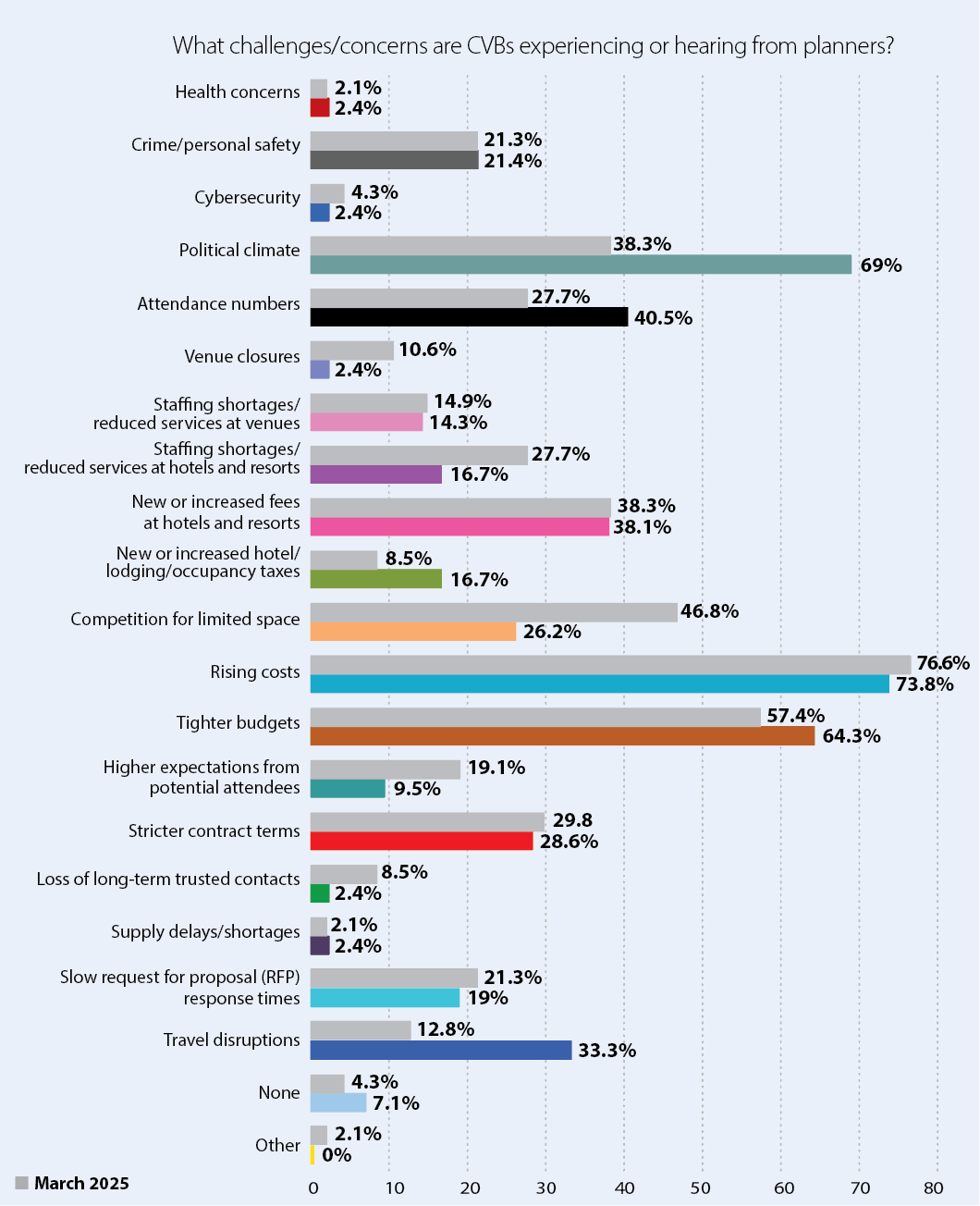
Financial considerations are top of mind in 2026, with planners noting rising costs (81.8%) and tighter budgets (75.8%) among the biggest issues this year.
“We are all working with tighter budgets, so it would be great if they would continue to consider this factor,” said one planner who completed the survey. “Attendees want different experiences, so the ability to offer planners various options for entertainment and lodging is appreciated.”
New or increased fees at hotels and resorts remain a concern for 48.5% of planners. New hotel and occupancy taxes are a concern for 36.4% of planners.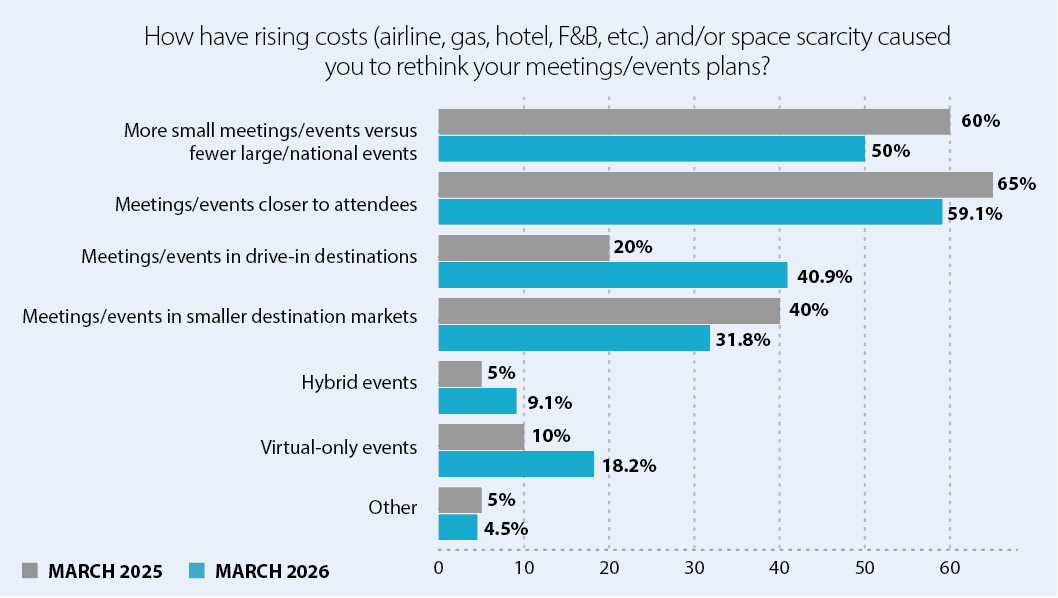
Almost half of CVBs (48.8%) have implemented cost-saving measures, including reduced marketing spending (61.9%), reduced operational costs (52.4%), and reduced services (19%). The efforts appear to have paid off in the bottom line, as 45.4% reported better financial results in 2025 than in 2024; another 40.9% reported steady economic outcomes.
Another positive outcome despite tighter budgets: 72.6% of CVBs report their staff size has not changed in the past 12 months. In fact, 32% of CVBs expect to expand their staff this year, which aligns with 37.1% of CVBs reporting having experienced staffing shortfalls at venues and destinations. The most commonly reported staffing shortages were in customer service (69.2%), F&B (61.5%), housekeeping/cleaning (53.8%), and venue set-up (30.8%).
Both CVBs (69%) and planners (48.5%) reported the political climate as a concern, as it has impacted research funds and travel allowances. Attendance is another shared concern of both market segments, as indicated by 40.5% of CVBs and 39.4% of planners. Both sides could experience a boom from the 2026 FIFA World Cup events in Los Angeles.
Additional challenges noted by CVBs include rising costs (81%), tighter budgets (64.3%), competition for available space (40.5%), and increased demand for leisure travel (21.4%). However, according to 83.3% of CVBs, these challenges have not negatively impacted their relationships with planners.
2026 projections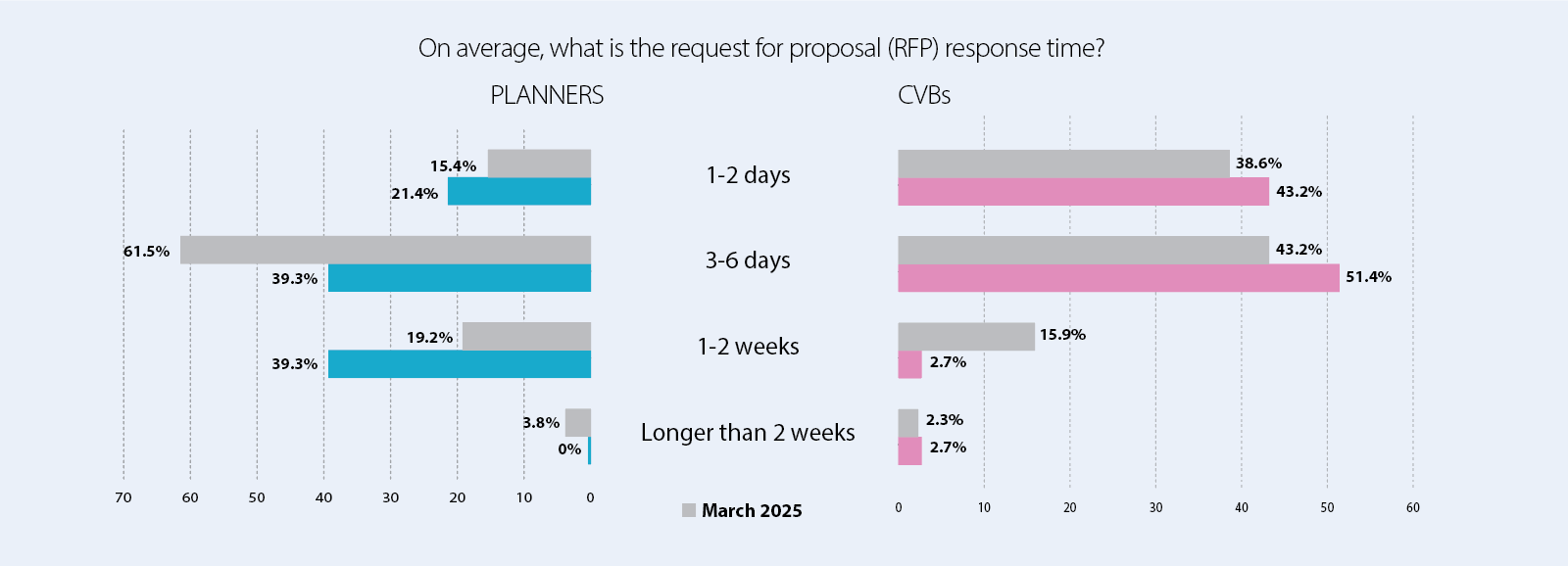
Rising costs and service challenges will impact where planners hold their meetings this year.
To combat these issues, 59.1% of planners indicated they are moving events closer to attendees, while 40.9% are eyeing drive-in destinations for events. Additionally, 50% of planners are relying on more small events rather than fewer large/national conferences and conventions.
Planners continue to explore different event options, with 18.4% noting they plan to host virtual-only events in 2026. Another 15.5% of planners are incorporating hybrid elements into their in-person events.
More than ever, planners are counting on CVBs to help shoulder the load, as pressure mounts to reach goals with less time to execute events.
“What planners want CVBs to understand most is that today’s environment is defined by compressed timelines, limited resources, higher expectations, and increased accountability,” as one planner shared.“CVBs that respond with flexibility, transparency, data, and operational support become trusted strategic partners rather than promotional intermediaries.”